
Big dogs need big beds. That may sound obvious at first, but in reality, there is far more to a dog bed for large dogs than just the dimensions.
Dog and Heat
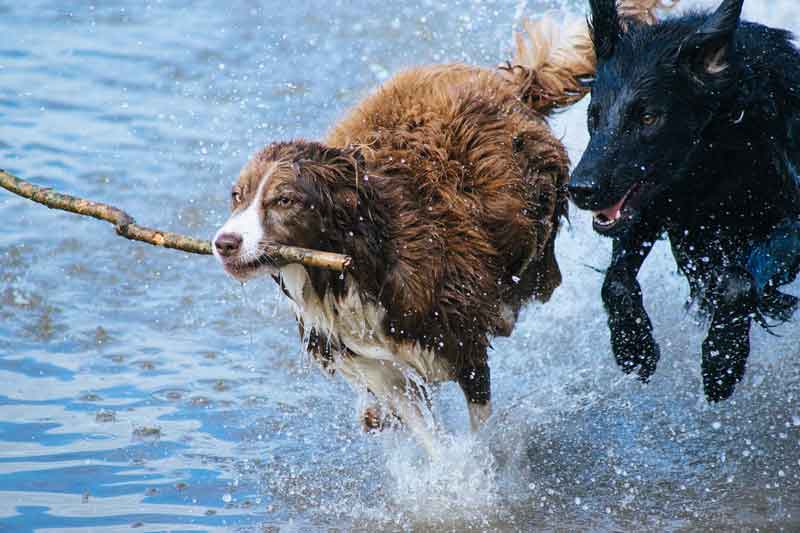
When it’s hot, dogs love to let off steam and cool off in the water.
Dogs and heat. Useful tips on how to survive the hot days.
You just have to imagine that the owner has to endure these high temperatures in a fur coat. Then it might be easier to understand how the dog feels in the heat. Since dogs, unlike humans, cannot cool down through sweat – our four-legged friends have only a few sweat glands – dogs and heat do not get along so well. Cooling down works through panting. Heavy panting should already alert the dog owner to take countermeasures.
We have put together some useful tips here to help our dogs survive the hot summer well.
Cooling down with water
If the dog likes to swim, cooling down in a lake, river, stream or the sea is a great way to refresh themselves. Equipped with swimming toys and balls, bathing is a successful activity. This way, dogs and heat are even fun.
If the dog doesn’t mind, it can also be sprayed off with the garden hose (starting at the paws). Catching the drops of water is fun for almost every dog.
If the garden hose is not your four-legged friend’s friend, a sturdy children’s paddling pool will also provide cooling.
Walking the dog in summer
If the temperatures are very high, long walks should be scheduled for the early morning or late evening. Walking with the dog and the heat is bearable on cool lawns or shady forest paths. Otherwise, older animals in particular can quickly develop circulatory problems.
During the day, only short walks are recommended, preferably not on hot asphalt. During the midday hours, a nap in the shade or in the cool apartment is on the agenda.
Avoid walking on pavement and asphalt, open fields and paths without shade. Check the heat of the road surface by pressing your hand onto the surface. If you cannot calmly count to 10, the ground is too hot and will burn the dog’s paws. Even if the road surface is not quite so hot, long walks can lead to burns.
Staying outdoors
It is best to stay in the shade with your dog and the heat. On the cool grass in the park under a shady bush, you can bear it even in high temperatures. A stay in the forest is a great change for dog and owner. Strenuous activities such as cycling should be avoided as they put too much strain on the cardiovascular system.
Grooming in hot weather
The fur should be brushed regularly in summer so that more air can reach the skin. Your darling will also be happy with a short summer cut and thinning of the fur, which will give him relief. Dogs can get sunburnt in hairless areas, so don’t cut them too short. Dogs with dark fur suffer much more in the summer heat, so make sure you go into the shade. You can also give your dog relief in hot weather by moistening his legs and stomach or putting a damp cloth on his body.
It is ideal if the four-legged friend can move freely in and around the house in the heat. He will then usually find a cool place himself, inside or outside.
Food and water
Of course, you always have to provide your dog with enough fresh water in hot weather so that it can quench its thirst at any time.
Smaller food portions spread throughout the day are less stressful for the body.
Homemade ice cream is a welcome change for the dog. You can find some recipes to download here.
Traveling in the car with your dog
It cannot be stressed enough: never leave your dog alone in the car in summer temperatures. It is not enough to park the car in the shade. Always take your dog with you. You can be stopped for any reason. The sun moves and in no time at all the temperatures inside the car are hellishly hot and become a death trap. Lack of oxygen, nausea and circulatory failure can lead to the animal’s death in the worst case scenario.
The use of air conditioning is essential for long journeys. If there is no air conditioning, long car journeys must be planned for the cool morning hours or late evening.
Call the police immediately if you discover an animal in a car. If an animal owner acts irresponsibly, he can be held accountable under Section 17 of the Animal Welfare Act. Fines and/or imprisonment of up to 3 years are threatened.
Recognize warning signals
Heavy panting with a stretched neck, a glazed look and a deep red tongue are a warning sign that the heat is getting too much for your four-legged friend. If vomiting, loss of balance and unconsciousness are added to this, the dog has suffered heatstroke, which in the worst case can lead to death. You should consult a vet as soon as possible!
Here you can find information on the topic Heatstroke in Dogs.
Recipe ideas for dog ice cream
Banana Ice Cream
- 1 overripe banana
- 100 g cottage chease
Ice Cream with Watermelon
- 100 g watermelon
- 100 g natural yogurt
Blueberry Ice Cream
- 100 g blueberries
- 100 g quark
Preparation
Mix all ingredients and fill into ice cube trays. Stick a small wooden stick or spoon into each ice cube so that you can feed it to your dog. For larger portions, you can also freeze the ice cream in muffin tins.
Important: Offer the dog the ice cream in small portions and make sure that it only swallows small pieces at a time.
Recipe for dog ice cream
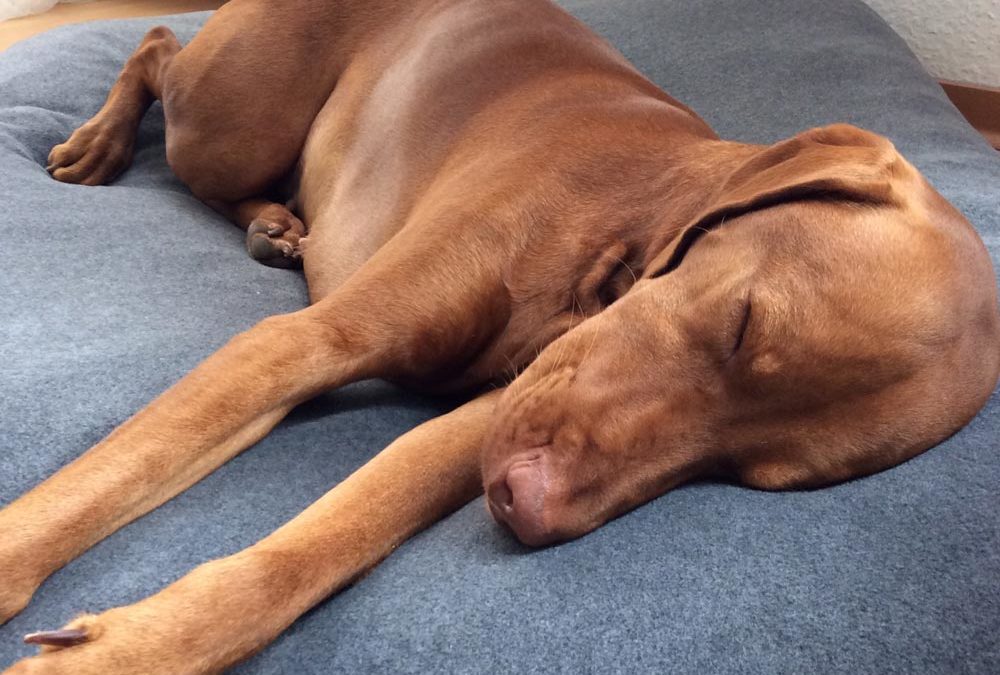
Dog bed for large dogs

Dog beds for small dogs
Are you looking for a dog bed that guarantees comfort for your small dog?
Here, we present five dog beds from our workshop. Stylish, expertly crafted—and supremely cozy.
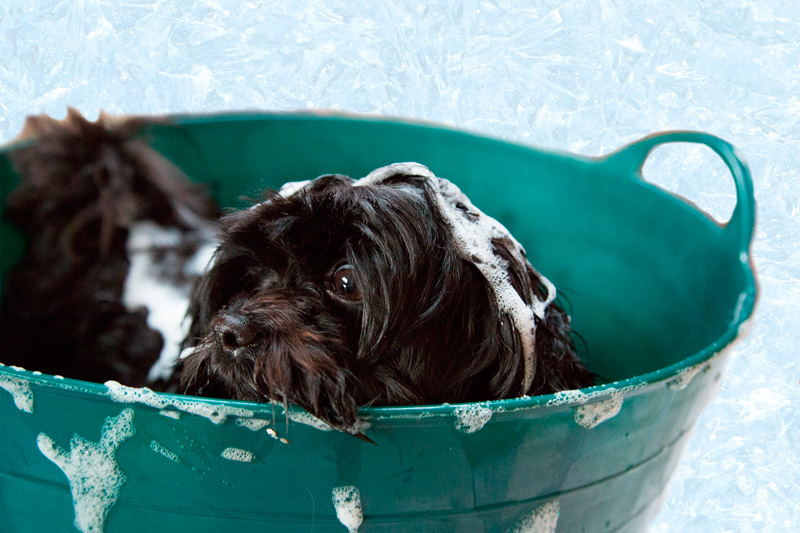
Dog shampoo for sensitive skin
If you don’t feel comfortable washing your dog with a shampoo whose ingredients list you can’t even pronounce, here’s a great recipe …


Recent Comments