+49 9571 9400 117 info@pet-interiors.com

Great recipe for dog cookies & dog treats

Baking dog biscuits yourself is not a big effort.

Although they cannot be used as a complete food, they are a very tasty and healthy addition. The advantage of handmade dog treats is obvious: you know exactly what is in them, they usually cost less than store-bought ones, and you can adapt the dog biscuits to your dog’s taste and tolerance.

As homemade dog biscuits do not contain any artificial preservatives, they only have a limited shelf life. It is therefore better to bake a small portion of dog biscuits every now and then. It is also important that the dog treats cool down properly after baking and that the moisture completely escapes. To prevent mold from forming, an air-permeable box or tin is highly recommended for storing the dog biscuits. We all know this from Christmas baking.
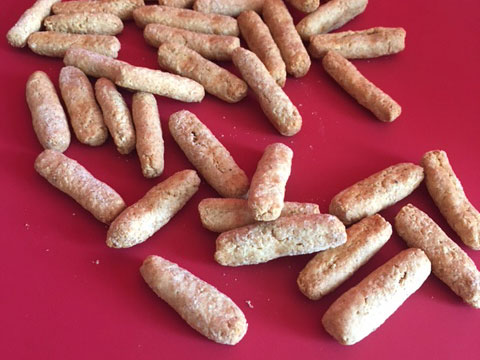
Healthy dog  treats without artificial preservatives

Baking your own dog treats

Dog biscuits – Quark sticks

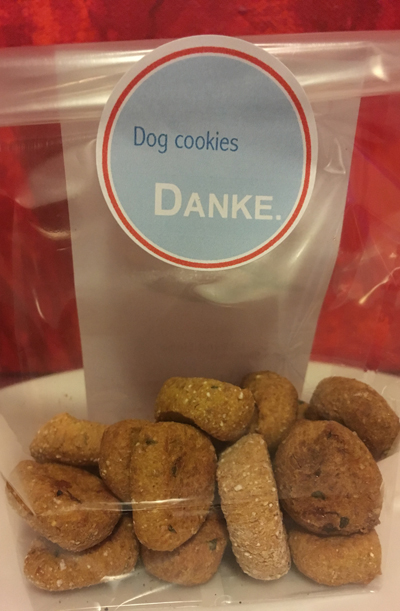
These tender dog biscuits, Quark Sticks, are very easy to bake yourself and are super tasty. You almost always have the ingredients for these dog treats in the house and they are a good, healthy reward for in-between meals and perfect for dog training. Beautifully packaged, the dog cookies also make a great gift or a small souvenir for other dog owners.

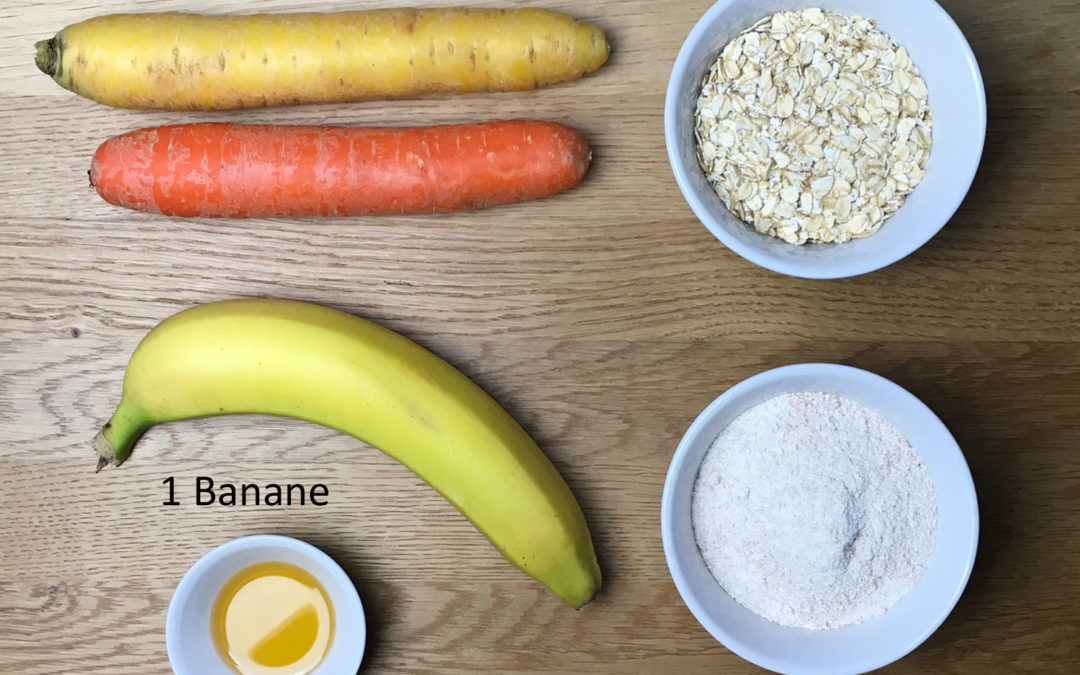
The ingredients for the dog biscuits – Quark sticks:

  • 100 g fine oat flakes
  • 100 g wholemeal spelt flour
  • 150 g low-fat quark
  • 1 egg
  • 50 g butter

Preparation:

Mix all the ingredients for the dog biscuits well and knead into a smooth dough.
Form the dough into a roll about 2 cm thick and cut about 1 cm thick slices from it. Simply form small rolls from these sections. Place the quark sticks on the baking rack lined with baking paper and bake at 150°. After 20 to 25 minutes, the dog biscuits are properly baked and can be taken out of the oven. Be sure to let the dog treats cool and dry overnight.

The dog biscuits are stored properly in an air-permeable container and will last for at least 4 weeks.
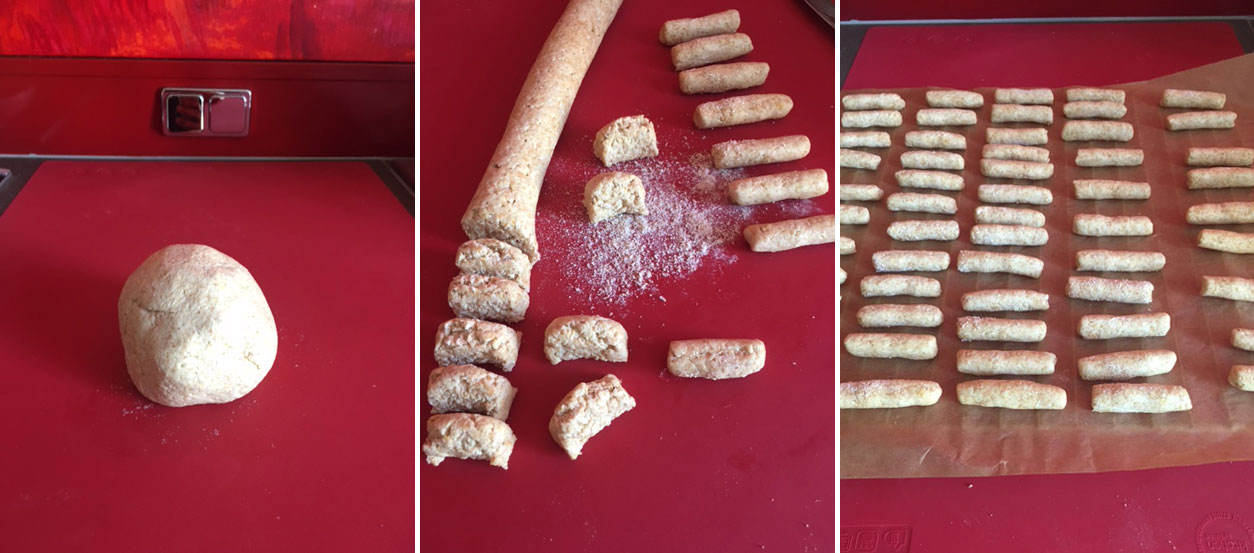
Baking your own dog treats

Since all the ingredients we used for the dog biscuits come from our fridge and are intended for human consumption, we can also eat the dog biscuits ourselves. But without spices, they are rather tasteless for human taste.

Puppy chews everything – what can I do?

How do I stop my puppy from chewing everything? How do I stop my dog ​​from biting furniture, tearing wallpaper, chewing shoes, and gnawing on cables and other things? Unwanted chewing is not only destructive and expensive when it is done on the couch or personal items. Chewing on electrical cables is dangerous and in the worst case scenario it can cost the dog its life. The fact is that no puppy destroys things because it wants to annoy you. There are other reasons behind its bad behavior, which we will try to get to the bottom of here.

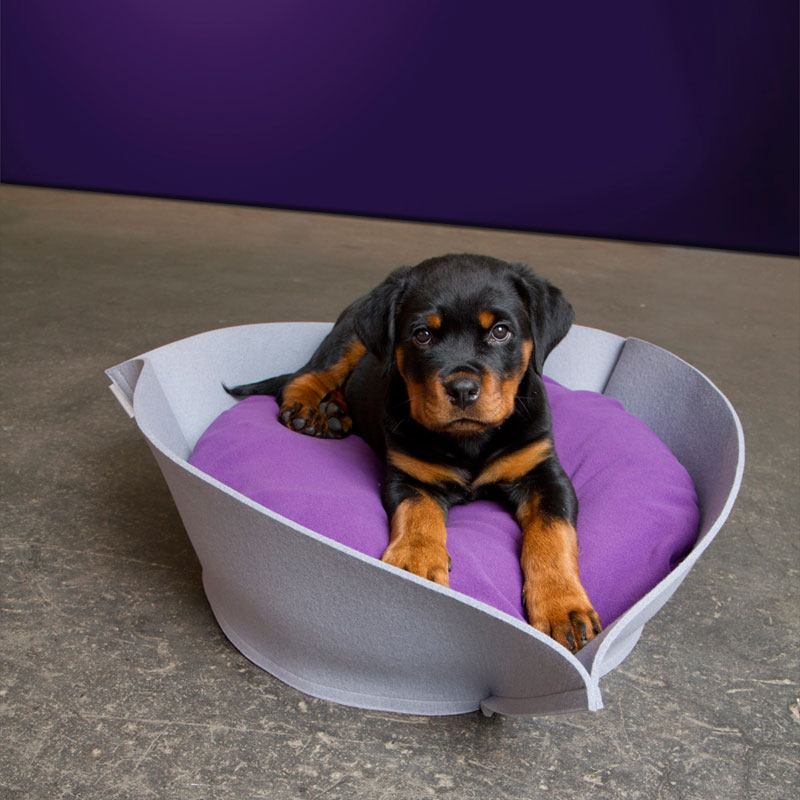
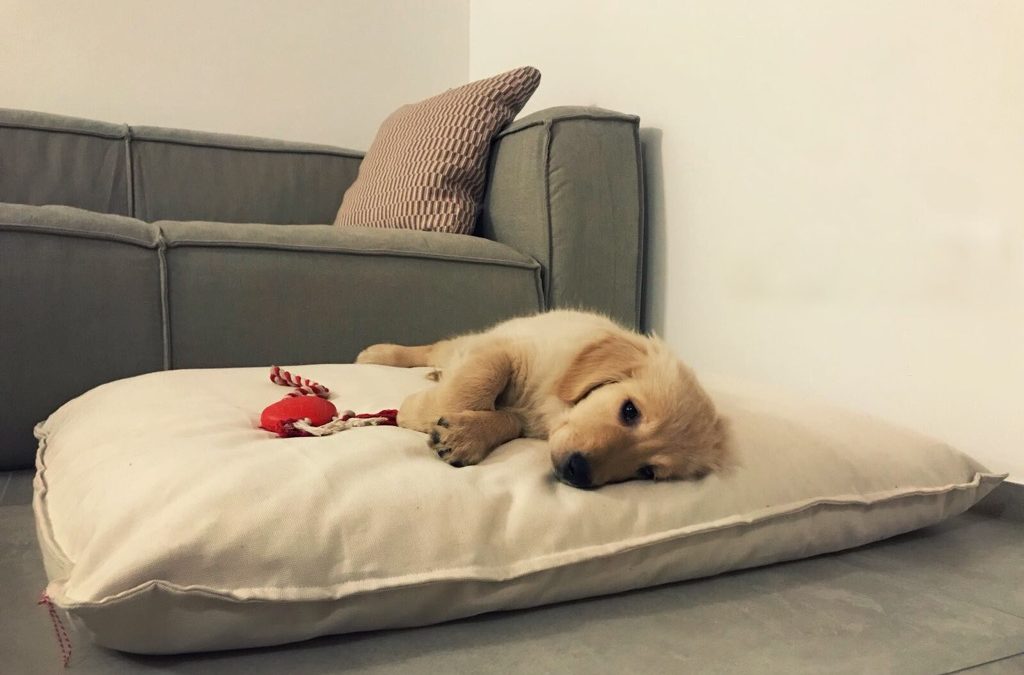
The little Rottweiler puppy feels good.

Make the apartment puppy-proof.

Put away all valuable items that could be dangerous for the dog. Remove electrical cables from the area that the dog can access and secure the sockets with child safety locks. Do not leave any clothing or other items that are important to you lying around. The trash can should also be out of reach of the small dog.

Rule out illness.

In very rare cases, unwanted chewing can be a sign of illness. It is extremely rare for a brain tumor or thyroid disease to cause this change in the dog’s personality. When you take your little dog to the vet, ask for his opinion.

Is your puppy teething?

Puppies are naturally curious and explore their environment with their mouths just like small children do. To properly explore their environment, they put interesting objects in their mouths and chew on them. This increases significantly when the second teeth come through between the third and seventh month. When teething, small dogs have a special need to constantly gnaw on something. Chewing is the best way to make the pain more bearable.

Offer your dog alternatives that are more interesting than your furniture and taste better. Get special chews from the dog shop. If these don’t have the desired effect, you can rub them with peanut butter or bacon to make them more attractive to the little one.

Does your puppy seek attention?

The dog wants your attention, even if it is negative attention. Negative attention is better than no attention. If the dog is not given enough time and his social needs are not met, he will misbehave to get your attention.

Keep your dog mentally and physically occupied to burn off his excess energy. A quick walk around the block is not enough. Take long walks in nature, let him swim or go jogging with him. You know your dog best and will know what kind of exercise he enjoys.

Does the dog have separation anxiety?

To track down this phenomenon, it is helpful to observe your dog with a camera when he is home alone. If your puppy starts chewing on everything and “letting off steam” immediately after you leave the house, this can be a sign of separation anxiety and stress management. A dog usually becomes restless and starts barking or howling as soon as it notices that you want to leave the house without it. For this type of anxiety and stress management, your dog needs special training from an experienced dog trainer.

Your puppy is suffering from a lack of exercise and is bored.

Once you have installed the camera, you can see if your puppy starts chewing after you have left the house. In this case, boredom may be a trigger for the destructive behavior. Under-stimulated dogs tend to find their own tasks to keep themselves physically and mentally occupied. For example, they will investigate the garbage or chew your leash to satisfy their curiosity and relieve excess energy.

Make sure the little puppy gets enough exercise and mental stimulation so that it can relieve its excess energy. There are many toys you can make yourself that will keep the dog occupied while you are away.

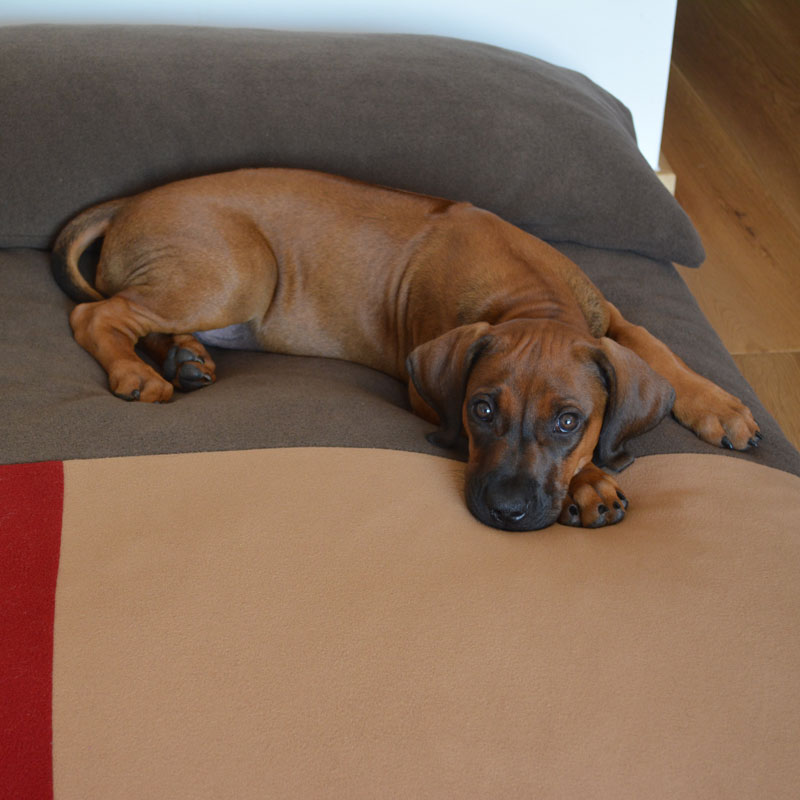
Rhodesian Ridgeback puppy Juma.

Conclusion

Dogs chew out of a natural instinct. Chewing is a natural reflex for the dog or other animals such as cats, mice and even cows. Wolves chew sticks and bones in the wild.
Think about what the dog gains and what he achieves by chewing. Does it help the puppy with teething, does chewing reduce stress and pent-up energy? Does it provide mental stimulation or reduce hunger? It can break down barriers and keep him busy with fun games. Once you understand that the chewing reflex is of natural origin, find the solution to the problems listed above. Offer your dog alternatives that taste much better than your slippers or his leash. Your puppy must be excited by your offer of a solution and he will change his chewing habits.

Bake your own dog biscuits

Bake your own dog biscuits

Your four-legged friend will love these healthy dog ​​biscuits. Since you prepare all the ingredients yourself, you know exactly what’s in the biscuits and what your dog is consuming. …

Dog cookies that are also very tasty for cats

Ingredients:

  • 200 g wholemeal spelt flour
  • 50 g soft rolled oats
  • 40 g grated cheese, e.g. Pecorino or Parmesan
  • 50 g butter
  • 1 tbsp olive oil
  • 2 eggs


Preparation:

Mix the flour with the rolled oats and cheese. Mix the butter with the olive oil and eggs until creamy and then knead in the flour mixture until you have a smooth dough that is easy to roll out. Cut out shapes from the dough or simply cut diamonds. The pieces should be quite small for the cat, as the cookie is difficult to break into small pieces when baked. Bake in the oven at 180° for about 20 to 30 minutes.

  • Leave the cookies to dry out well overnight and then store in a tin in a dry place.
  • The recipe makes approx. 350 g of cookies.
  • The cookies will keep for at least 8 weeks.

PS: The recipe is originally for dogs. Our cat Gisela reacted very passionately to the cookies and now always gets her own portion baked.

The Dachshund

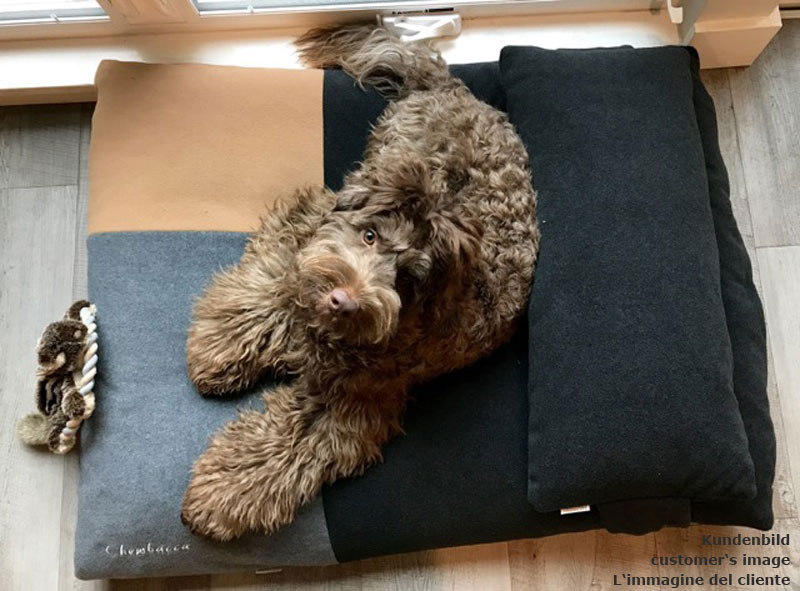
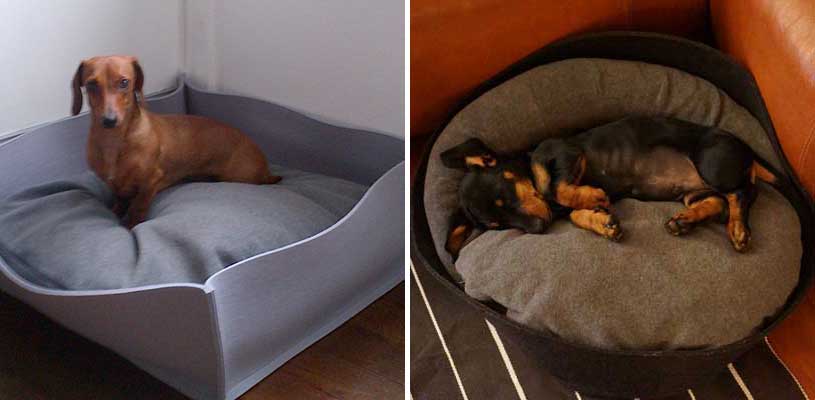
Dachshund lady Josefine and Dachshund male Ule enjoy our designer dog baskets

To better understand the nature and character of the Dachshund, you should know that it was originally bred for hunting underground. Among other things, they were used to hunt badgers, which are superior to dachshunds as predators. This resulted in its combative, self-confident and decisive nature.

The Dachshund’s body shape is characterized by short legs and an elongated body shape. Extensive jumping and agility as a dog sport are not recommended for the Dachshund’s long back.

The character of the Dachshund can be easily deduced from its original area of use. Its self-confident demeanor recommends consistent training from puppyhood onwards. When interacting with other dogs, Dachshunds often show little respect, even towards larger, stronger dogs. Motivation and consistency are the key to success when training Dachshunds, but they should still be given a certain amount of freedom.

His passion for digging is legendary and a place of his own in the garden to indulge his passion is actually part of a species-appropriate attitude.
The Dachshund will become a family dog if it grows up with children and does not have any negative experiences. Nevertheless, it is advisable not to leave dogs and small children alone, especially if they are unfamiliar to the animal.

The terms rough-haired, short-haired and long-haired dachshund describe the coat texture.


The different types of Dachshund refer to the size of the dogs


Varieties:

  • Dachshund: largest dachshund breed, chest circumference approx. 35-40 cm
  • Miniature dachshund: chest circumference approx. 30-35 cm
  • Rabbit dachshund: Chest circumference max. 30 cm


Facts about the Dachshund

  • Life expectancy approx. 14 to 17 years
  • Urge to move medium
  • Training effort high,
  • Low grooming effort
  • Time expenditure high
Bake your own dog biscuits

Bake your own dog biscuits

Your four-legged friend will love these healthy dog ​​biscuits. Since you prepare all the ingredients yourself, you know exactly what’s in the biscuits and what your dog is consuming. …

French Bulldog

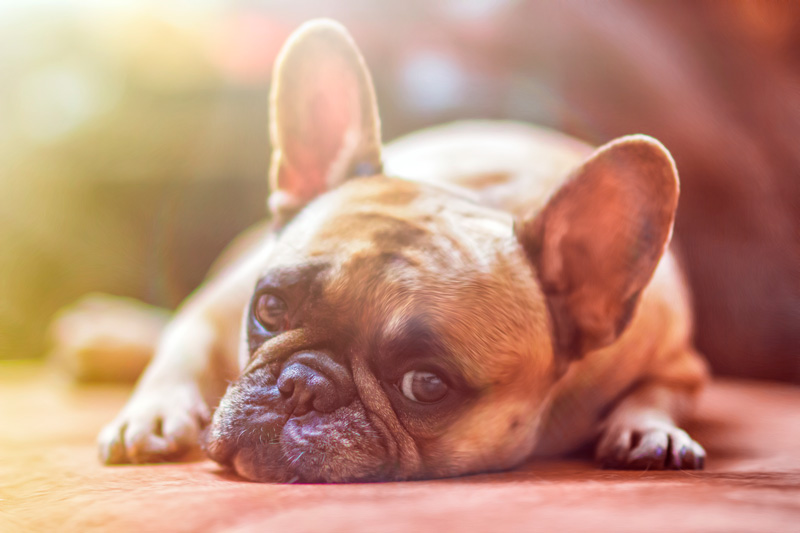
The French Bulldog is a lively, alert dog. It is very agile, although it has a muscular and compact build. Its bat ears and short tail also characterize it, as does a broad and angular head with a blunt-nosed face. The face of this dog breed is characterized by numerous wrinkles on the forehead, nose and zygomatic arches. The coat is short-haired and easy to care for. They do not tolerate blazing sun, extreme heat and cold.

The nature of the French Bulldog is sociable, friendly and cheerful. They are calm, self-confident and sensitive companion dogs, but at the same time playful, sporty and alert. Keeping them in kennels is completely unsuitable for this breed. They need unrestricted attention and love individual contact with their owner.

French Bulldogs do not need much exercise, but are enthusiastic about long walks and are attentive, affectionate companions.


Facts about the French Bulldog

  • High urge to move
  • Colors: fawn, brindle, piebald
  • Function: companion and guard dog
  • Weight: 8 – 14 kg
  • Height: approx. 36 cm
  • Life expectancy: approx. 13 – 15 years

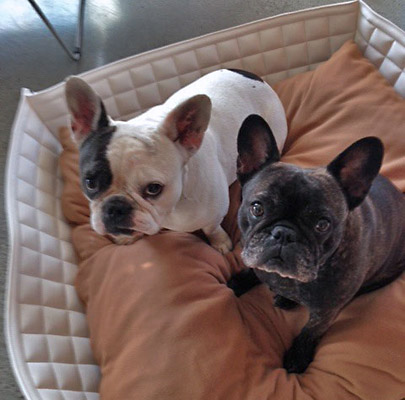
Porkchop & Lambchop in the BOWL designer dog bed