Mar 5, 2025 | Customer stories, Dogs
How do I stop my puppy from chewing everything? How do I stop my dog from biting furniture, tearing wallpaper, chewing shoes, and gnawing on cables and other things? Unwanted chewing is not only destructive and expensive when it is done on the couch or personal items. Chewing on electrical cables is dangerous and in the worst case scenario it can cost the dog its life. The fact is that no puppy destroys things because it wants to annoy you. There are other reasons behind its bad behavior, which we will try to get to the bottom of here.
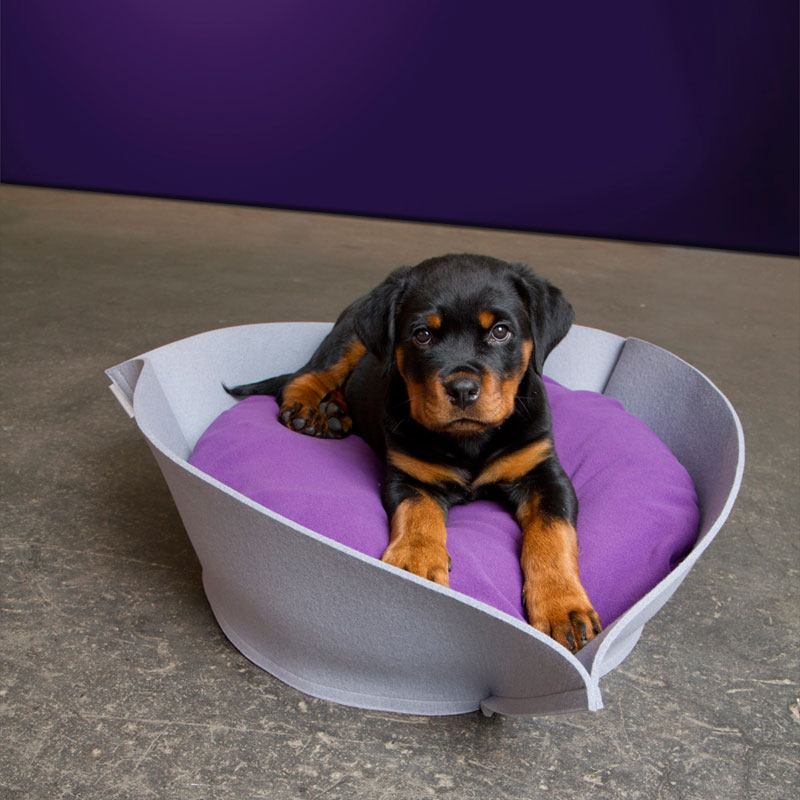
The little Rottweiler puppy feels good.
Put away all valuable items that could be dangerous for the dog. Remove electrical cables from the area that the dog can access and secure the sockets with child safety locks. Do not leave any clothing or other items that are important to you lying around. The trash can should also be out of reach of the small dog.
In very rare cases, unwanted chewing can be a sign of illness. It is extremely rare for a brain tumor or thyroid disease to cause this change in the dog’s personality. When you take your little dog to the vet, ask for his opinion.
Puppies are naturally curious and explore their environment with their mouths just like small children do. To properly explore their environment, they put interesting objects in their mouths and chew on them. This increases significantly when the second teeth come through between the third and seventh month. When teething, small dogs have a special need to constantly gnaw on something. Chewing is the best way to make the pain more bearable.
Offer your dog alternatives that are more interesting than your furniture and taste better. Get special chews from the dog shop. If these don’t have the desired effect, you can rub them with peanut butter or bacon to make them more attractive to the little one.
The dog wants your attention, even if it is negative attention. Negative attention is better than no attention. If the dog is not given enough time and his social needs are not met, he will misbehave to get your attention.
Keep your dog mentally and physically occupied to burn off his excess energy. A quick walk around the block is not enough. Take long walks in nature, let him swim or go jogging with him. You know your dog best and will know what kind of exercise he enjoys.
To track down this phenomenon, it is helpful to observe your dog with a camera when he is home alone. If your puppy starts chewing on everything and “letting off steam” immediately after you leave the house, this can be a sign of separation anxiety and stress management. A dog usually becomes restless and starts barking or howling as soon as it notices that you want to leave the house without it. For this type of anxiety and stress management, your dog needs special training from an experienced dog trainer.
Once you have installed the camera, you can see if your puppy starts chewing after you have left the house. In this case, boredom may be a trigger for the destructive behavior. Under-stimulated dogs tend to find their own tasks to keep themselves physically and mentally occupied. For example, they will investigate the garbage or chew your leash to satisfy their curiosity and relieve excess energy.
Make sure the little puppy gets enough exercise and mental stimulation so that it can relieve its excess energy. There are many toys you can make yourself that will keep the dog occupied while you are away.
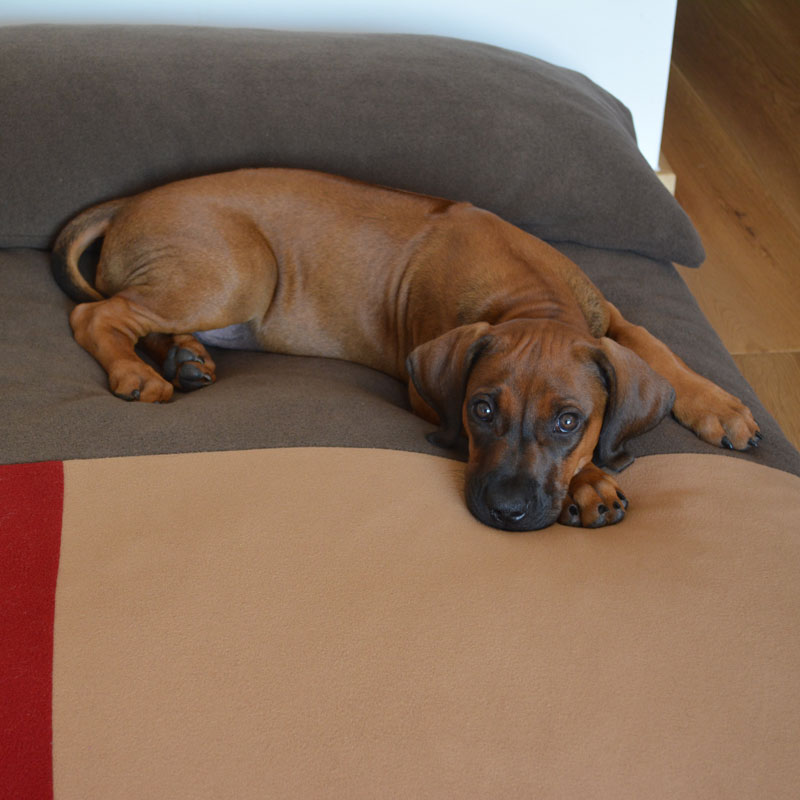
Rhodesian Ridgeback puppy Juma.
Conclusion
Dogs chew out of a natural instinct. Chewing is a natural reflex for the dog or other animals such as cats, mice and even cows. Wolves chew sticks and bones in the wild.
Think about what the dog gains and what he achieves by chewing. Does it help the puppy with teething, does chewing reduce stress and pent-up energy? Does it provide mental stimulation or reduce hunger? It can break down barriers and keep him busy with fun games. Once you understand that the chewing reflex is of natural origin, find the solution to the problems listed above. Offer your dog alternatives that taste much better than your slippers or his leash. Your puppy must be excited by your offer of a solution and he will change his chewing habits.
Sep 13, 2024 | Cats, Dogs, Recipes
Ingredients:
- 200 g wholemeal spelt flour
- 50 g soft rolled oats
- 40 g grated cheese, e.g. Pecorino or Parmesan
- 50 g butter
- 1 tbsp olive oil
- 2 eggs
Preparation:
Mix the flour with the rolled oats and cheese. Mix the butter with the olive oil and eggs until creamy and then knead in the flour mixture until you have a smooth dough that is easy to roll out. Cut out shapes from the dough or simply cut diamonds. The pieces should be quite small for the cat, as the cookie is difficult to break into small pieces when baked. Bake in the oven at 180° for about 20 to 30 minutes.
- Leave the cookies to dry out well overnight and then store in a tin in a dry place.
- The recipe makes approx. 350 g of cookies.
- The cookies will keep for at least 8 weeks.
PS: The recipe is originally for dogs. Our cat Gisela reacted very passionately to the cookies and now always gets her own portion baked.
Feb 23, 2024 | Dogs
Why a quiet, restful sleep is so important for dogs.
For most dogs, the daily routine is similar. After the last round of walks, the dog and his owner go to bed. Peace returns, the dog can switch off and get a restful sleep. With a bit of luck next to your master and mistress in the bedroom. These sleeping sounds calm the pack animal dog the most.
It starts with the first alarm ringing. People become active and from this point on, the four-legged friend can no longer properly assess everyday life. He finds it difficult to switch off and usually just dozes in our presence.
If the dog sleeps deeply and soundly, the dog usually lies stretched out for a long time and there is hardly any body tension. If the four-legged friend is just resting, his eyes are closed, but he is always ready to react immediately to any deviations.
Healthy, sufficient and restful sleep is essential for dogs.
Rest periods throughout the day are extremely important to gather strength and process experiences. In addition, the immune system is strengthened and our four-legged friend is less susceptible to illness. Dogs get restful sleep, are much more relaxed in their behavior, more receptive, learn faster and have better motor skills.
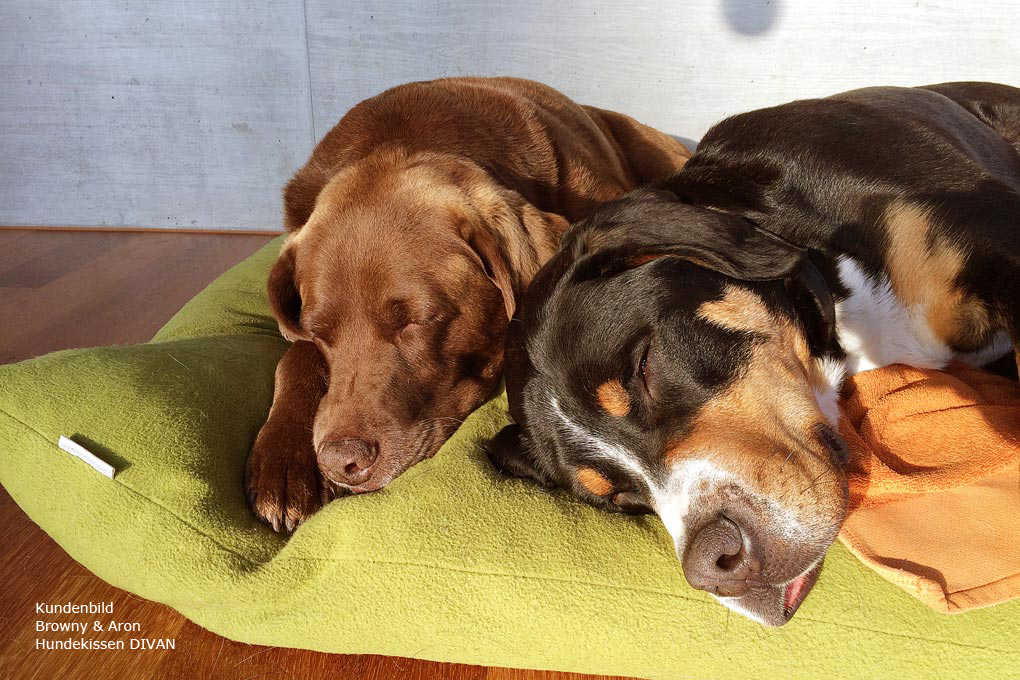
Dogs need a restful sleep.
How do I recognise if my dog is sleeping deeply?
If the dog is just resting, he has his eyes open and is looking around. He lies quietly in his place in the dog bed and doesn’t let himself be disturbed immediately.
When the dog is dozing, its nose and ears scan the surroundings. He has his eyes closed, is breathing normally and is not dreaming.
Dogs’ deep sleep phases are quite similar to those of humans. When you fall asleep, your heart rate and breathing slow down and your blood pressure drops. The REM phase comes in which the dogs process their experiences of the day. If the four-legged friend twitches and whines with his eyes closed, he is dreaming and is in the deep sleep phase. In contrast to humans, who dream for about a quarter of the deep sleep phase, the REM phase in adult dogs only lasts about 10% of their sleeping time, although young dogs need a little more.
Scientists have found that humans and dogs show identical patterns of sleep deprivation. They are initially more overexcited, then unfocused and have poor motor skills. Then comes the phase in which they are very irritable. The first symptoms of illness then appear, which can become chronic.
That’s why you should provide your dog with a place to sleep that offers maximum regeneration, because restful sleep is so important.
Restful sleep can be learned again.
Our dogs are no longer used to natural periods of rest. They are just as active as their master. Many dog owners also think they have to keep the dog busy. But the animal actually has to learn again to fall into a deep sleep during the day. In order for the dog to fall into a deep sleep during the day, a few things must be considered.
The perfect sleeping place is the be-all and end-all for the optimal regeneration of your four-legged friend.
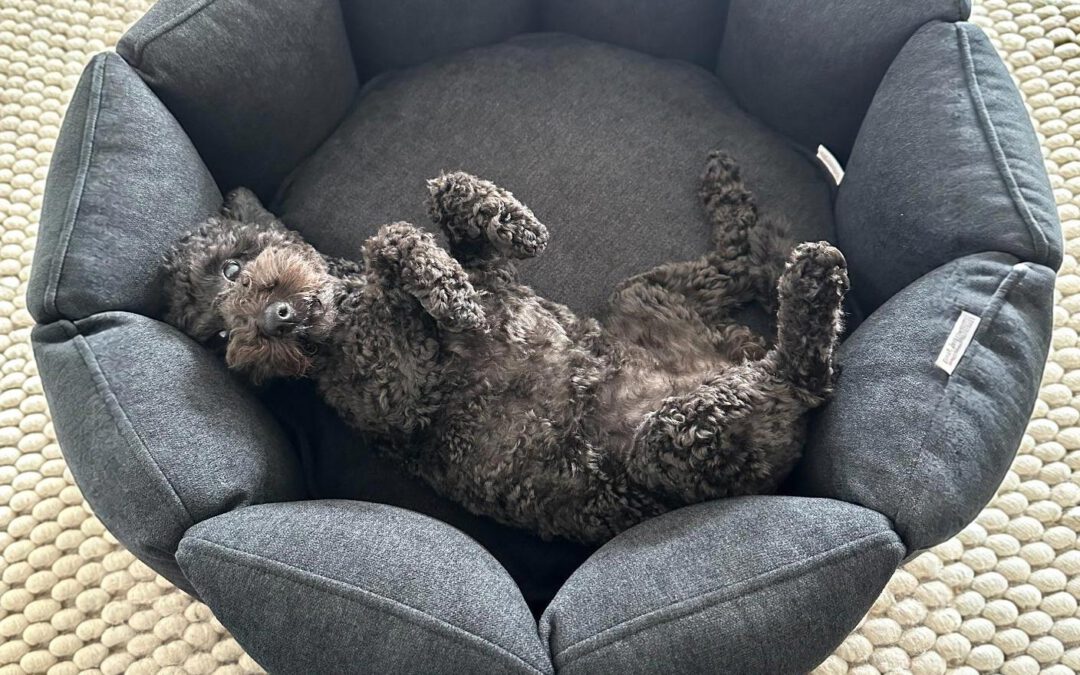
Nature has shaped dogs’ natural sleep experience. In order to have a feeling of security and protection, wolves dig a hole for themselves. Dogs get this security when their backs are protected, for example with our BOOX, CUBE, BLOOM dog bed or our ARENA dog basket.
Do not place the dog basket in the middle of the room. It is better to place it on a quiet side or corner of the room, without direct sunlight and free from drafts. Also not directly in front of the heater, as the dog can quickly become too warm. Please do not place the sleeping area in a passage or hallway. There is too much “traffic” and unrest at this point. So that your furry friend can switch off and find peace, a somewhat hidden, protected place is the right place for the dog bed.
To prevent joint problems, please do not let your dog sleep directly on the cold, hard floor. Provide him with a place to sleep that is well insulated from cold and heat (underfloor heating). Our dog cushions are thick enough to meet these requirements. The orthopedic latex filling also ensures a healthy, deep sleep. It supports the dog’s body with its excellent point elasticity and optimally reflects the body shape so that there is no pressure on the intervertebral discs and spine. This ensures optimal muscle relaxation.
If the dog already has problems with its joints, we recommend a viscoelastic (memory foam) dog mat like our PAUL or MARY.
Make sure the dog bed is the right size. The dog should also be able to stretch out properly.
Which also ensures a good night’s sleep.
Exercise and exposure to fresh air are essential for a good night’s sleep. Mental demands such as nose work and tracking require not only the muscles but also the head. A restful sleep also depends on a good sleeping environment, but we have already discussed that. At night it is also important that the room is dark. The animal should also not be disturbed by loud ambient noises. To ensure that the bladder doesn’t strain during the night and prevent the dog from sleeping through the night, a final walk should take place before going to bed. Feed him early in the evening so that he has enough time to digest his evening meal.
Serious causes of too much sleep.
There is a big difference between sleeping and lying lethargic. Watch your dog closely. If he seems rather sluggish and lethargic, you should first check his feeding habits. Is it possible that your four-legged friend is not drinking enough or does he hardly have an appetite? This can be a serious red flag. When we humans have the flu, we don’t want to get out of bed and suffer from loss of appetite and lack of motivation. Watch your dog closely and see if he might
– receives too little employment and is under-challenged
– suffers from an underactive thyroid
– Is diabetic
– suffers from depression
– was infected with Lyme disease from a tick bite
Basically: 16 to 20 hours of sleep is normal for dogs and usually not a cause for concern. However, if your animal’s behavior suddenly changes, he is much less active, lies lethargic in his bed, or his drinking habits or eating behavior change, you should always consult a veterinarian.



Recent Comments